Evaluation /
How Is Universal Design Shaping Inclusive HCI Experiences?
The pursuit of universal design embodies HCI’s growing commitment to accessible and inclusive experiences for all. As researchers realized the “average” user is a myth, accounting for human diversity in abilities, cultures, and contexts became imperative. Catalyzed by advocates like Ronald Mace in architecture and Gregg Vanderheiden in tech, universal design principles gained traction in HCI through the 1990s. Guidelines emphasized equitable use, flexibility, simplicity, perceptibility, and tolerance for error to enable accessibility without specialized solutions. The emergence of ability-based design also championed more inclusive practices by foregrounding users’ capabilities instead of defined disabilities. Researchers like Jenny Waycott pioneered co-design methods embracing human variability as creative inspiration rather than a compromise. Today universal design reminds innovators that designing for one means designing for all. By championing accessibility as the rule not the exception, HCI brings empowerment and belonging within reach for more diverse people through technologies reflecting the full spectrum of user experiences.
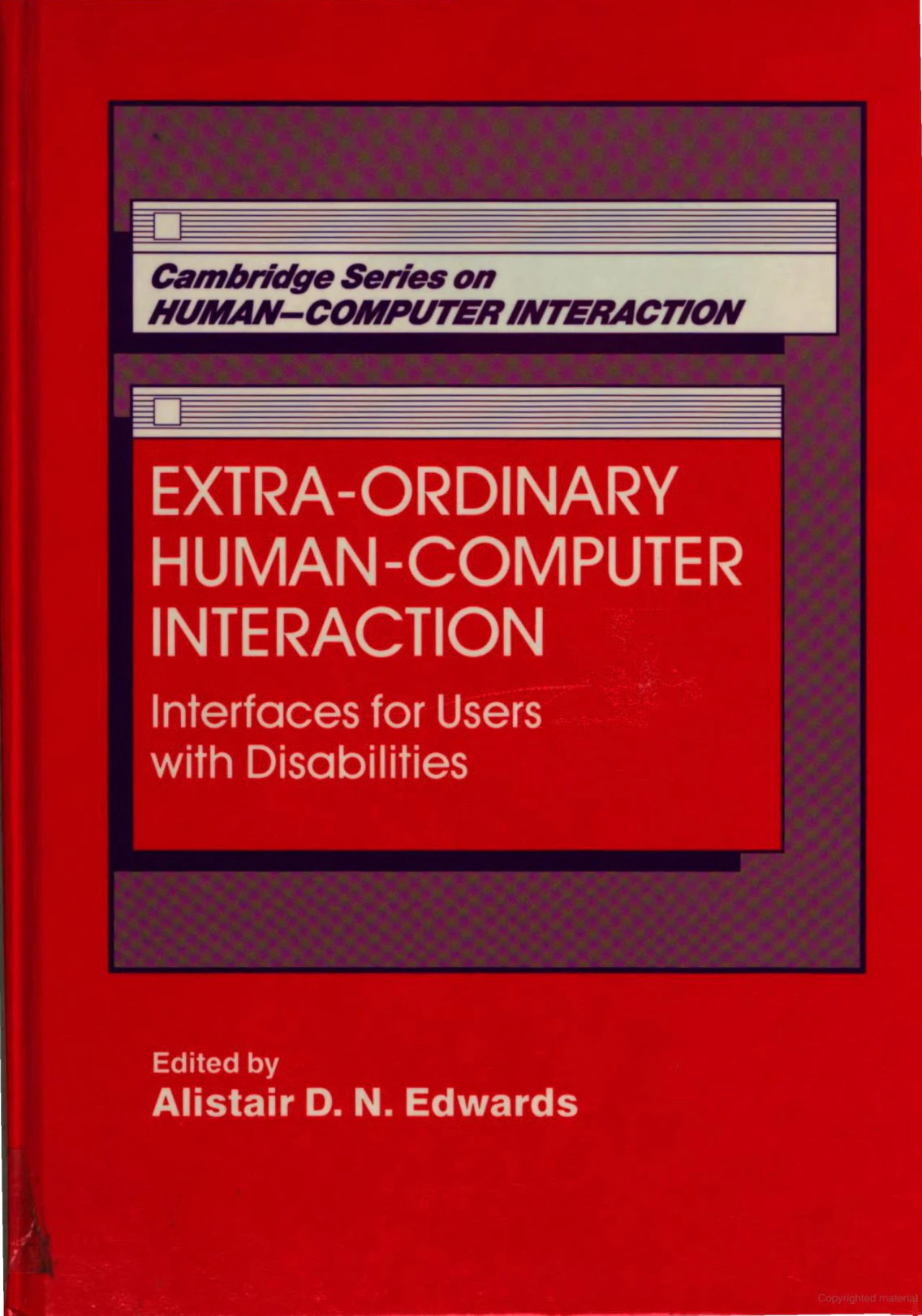
Extra-ordinary Human-Computer Interaction: Interfaces for Users with Disabilities
Alistair D. N. Edwards · 01/12/1995
This ground-breaking book from 1995 challenged the prevalent HCI paradigm by emphasizing the importance of versatile user interfaces catering to people with disabilities. Edwards' work pioneered the focus on accessibility, which is now recognized as a crucial component of HCI design.
- Accessibility: The paper advocates for designs that accommodate all users, regardless of abilities. It emphasizes that inclusive design benefits all users by improving usability overall.
- User-Centered Design: Edwards asserts that understanding the needs and abilities of users is crucial in developing accessible interfaces. He puts users at the heart of the design process.
- Assistive Technology: The author explores how assistive technologies like screen readers and alternative input devices can facilitate interaction for users with disabilities.
- Adaptive Systems: Edwards introduces the concept of systems that can adjust their behavior in response to the abilities and needs of the user, underscoring the need for adaptable, context-specific interfaces.
Impact and Limitations: While Edward's work has greatly influenced today's emphasis on accessibility in HCI design, it was somewhat ahead of its time and therefore faced implementation barriers. Nonetheless, it laid the groundwork for current accessibility guidelines and practices in digital design. Further research could develop more nuanced, flexible systems that cater to an even broader range of user abilities and preferences.
Read more
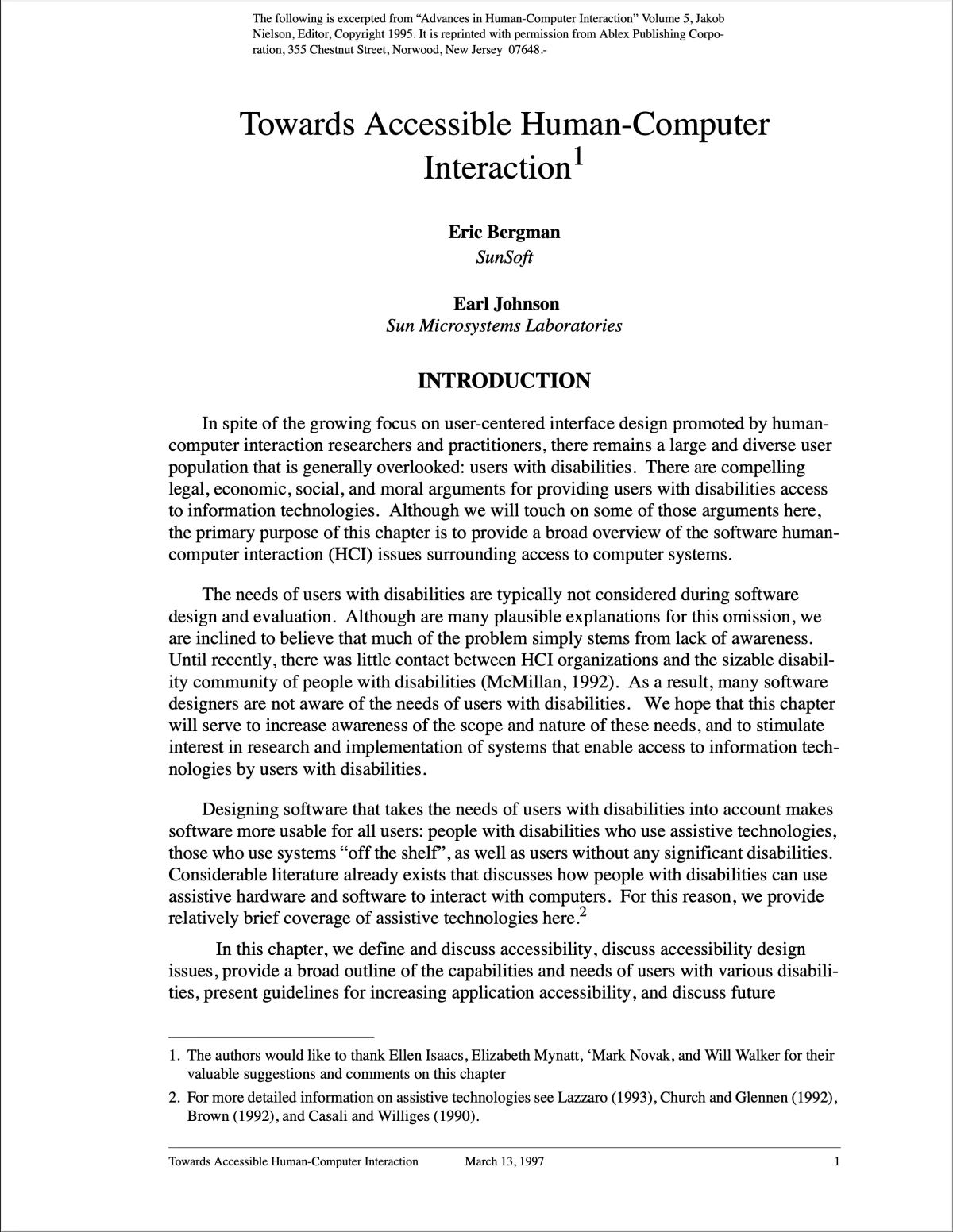
Towards Accessible Human-Computer Interaction
Eric Bergman, Earl Johnson · 01/03/1997
The 1997 paper by Bergman and Johnson marks an important milestone in the quest for inclusivity in Human-Computer Interaction (HCI). It emphasizes the need for making HCI more accessible, particularly to people with disabilities. Set against a backdrop where accessibility was often an afterthought, the paper posits it as a core design principle.
- Universal Design: Bergman and Johnson make an early case for universal design principles, advocating for systems that are accessible to users with varying abilities. The authors suggest an inclusive approach, where design caters to a wide range of physical and cognitive capabilities.
- Assistive Technologies: The paper outlines the role of assistive technologies such as screen readers and braille displays. It argues for their seamless integration into general-use systems, rather than being tacked on as specialized solutions.
- User Testing: The paper stresses the importance of involving people with disabilities in user testing, highlighting that their unique perspectives can reveal design flaws invisible to able-bodied testers.
- Regulatory Framework: Bergman and Johnson also touch upon the role of legal guidelines like the ADA, recommending that designers not just comply with these standards, but aim to exceed them for greater inclusivity.
Impact and Limitations: The work has significantly influenced the HCI field's approach to accessibility, prompting more inclusive design practices. However, it stops short of providing empirical data linking accessibility features to system usability or commercial success, indicating areas for further study.
Read more
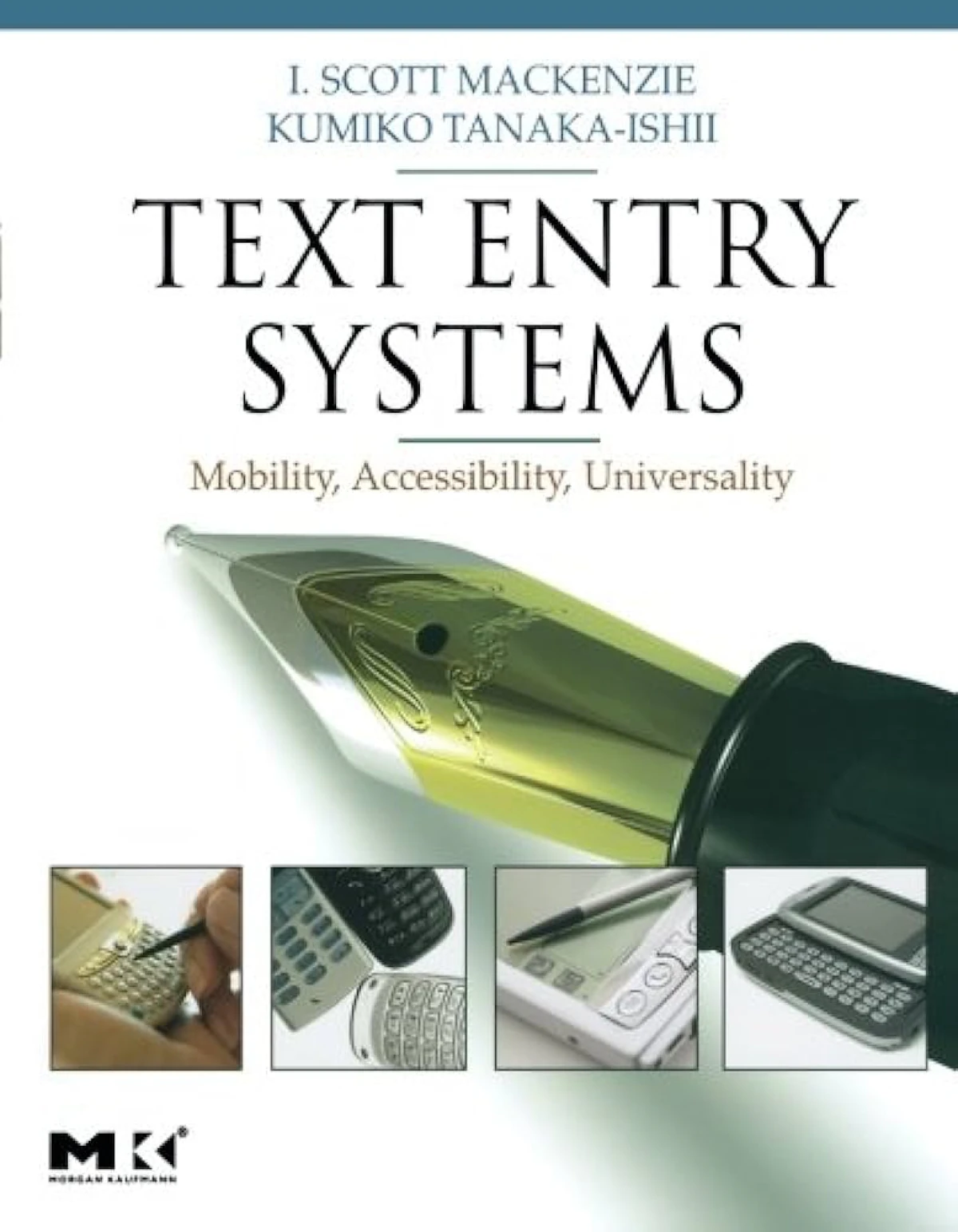
Text Entry Systems: Mobility, Accessibility, Universality
I. Scott MacKenzie, Kumiko Tanaka-Ishii · 01/03/2007
This seminal work revisits design principles for text entry systems in HCI, emphasizing the critical role of mobility, accessibility, and universality in designing human-computer interaction systems.
- Mobility: The book underscores the importance of flexibility in creating HCI systems. Effective text entry systems must be mobile, accommodating a range of physical locations and contexts.
- Accessibility: The authors emphasize the need for HCI systems to be accessible, accounting for differences in users' physical abilities, language comprehension, and digital literacy.
- Universality: The concept of universality is highlighted as a cornerstone for HCI design. Universality entails accommodating a broad spectrum of user preferences, including language, culture, and individual habits.
- Impact of Text Entry Systems: The text entry system plays a pivotal role in determining the efficiency and utility of HCI systems, impacting the user experience and the system's potential for successful adoption.
Impact and Limitations: This book's main contributions offer valuable insights into designing more user-centric, versatile, and inclusive HCI systems. However, the analysis largely focuses on text entry systems, missing broader HCI components. Future research should aim to expand these principles to other aspects of HCI design.
Read more
Universal Usability: Past, Present, and Future
Gabriele Meiselwitz, Brian Wentz, Dr. Jonathan Lazar · 01/08/2010
This pioneering paper casts a wide net over the conceptual and pragmatic aspects of universal usability within the sphere of Human-Computer Interaction (HCI). It maps the progression of universal usability and presents a forecast of its future.
- Universal Usability: This is the concept of making interfaces that can be used by as many people as possible irrespective of their abilities or disabilities. It's been a key element driving HCI evolution.
- Inclusive Design: Inclusive design or design for all, emphasizes an approach where products are designed considering the widest range of users. This idea goes beyond physical disabilities to encompass diverse user backgrounds and capabilities.
- Accessibility: A primary aspect of Universal Usability, accessibility focuses on the design of products, devices, services, or environments for people with disabilities. The paper underscores its pivotal role in HCI.
- Barrier-free Interfaces: Motioning towards future developments, the authors propose a world of 'barrier-free' interfaces that could adapt to user needs seamlessly.
Impact and Limitations: The concepts expounded in the paper, such as Universal Usability and Inclusive Design, have profoundly reshaped HCI and continue to do so. For instance, voice recognition tools now aid visually impaired users. However, the paper doesn’t fully explore the implications of emerging technologies like AI in universal usability. This leaves room for further research and exploration.
Read more
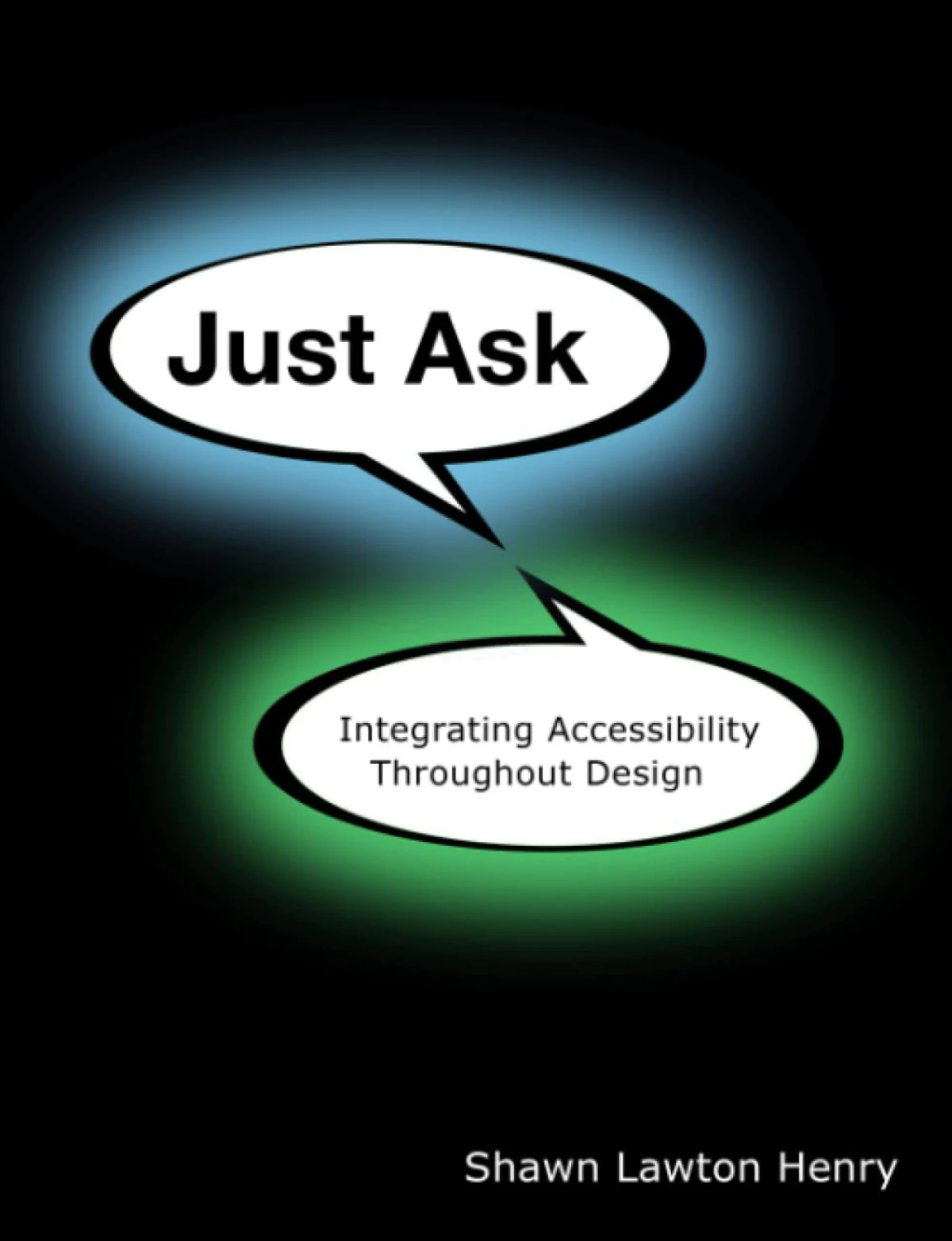
Just Ask: Integrating Accessibility Throughout Design
Shawn Lawton Henry · 01/09/2016
Shawn Henry's "Just Ask" serves as a landmark resource in the HCI field for championing accessibility. This book outlines a comprehensive framework for incorporating accessibility from the initial stages of product design. Within the broader context of HCI, the work has filled a critical gap by creating a roadmap for designing with inclusivity in mind.
- Accessibility-First Approach: Henry argues that accessibility should not be an afterthought but should be integrated throughout the design process. For practitioners, this means incorporating accessibility considerations from the get-go, even in the ideation phase.
- User-Centered Design: The book emphasizes the importance of involving users with disabilities in the design process. This underscores the necessity of user-centered design, reminding HCI professionals to cast a wider net in usability testing.
- Practical Guidelines: "Just Ask" is filled with actionable recommendations for making designs accessible. This offers HCI practitioners a set of tools and best practices they can directly apply in their work.
- Legal and Ethical Implications: The book touches on the potential legal consequences of failing to provide accessible designs, while also urging designers to take moral responsibility.
Impact and Limitations: "Just Ask" has become a foundational text for accessibility in HCI. Its impact is evidenced in how design education now often includes accessibility as a core component. However, the book could benefit from updates to address rapid technological changes. Additionally, future research could focus on specific sectors, like healthcare or education, to provide nuanced accessibility solutions.
Read more
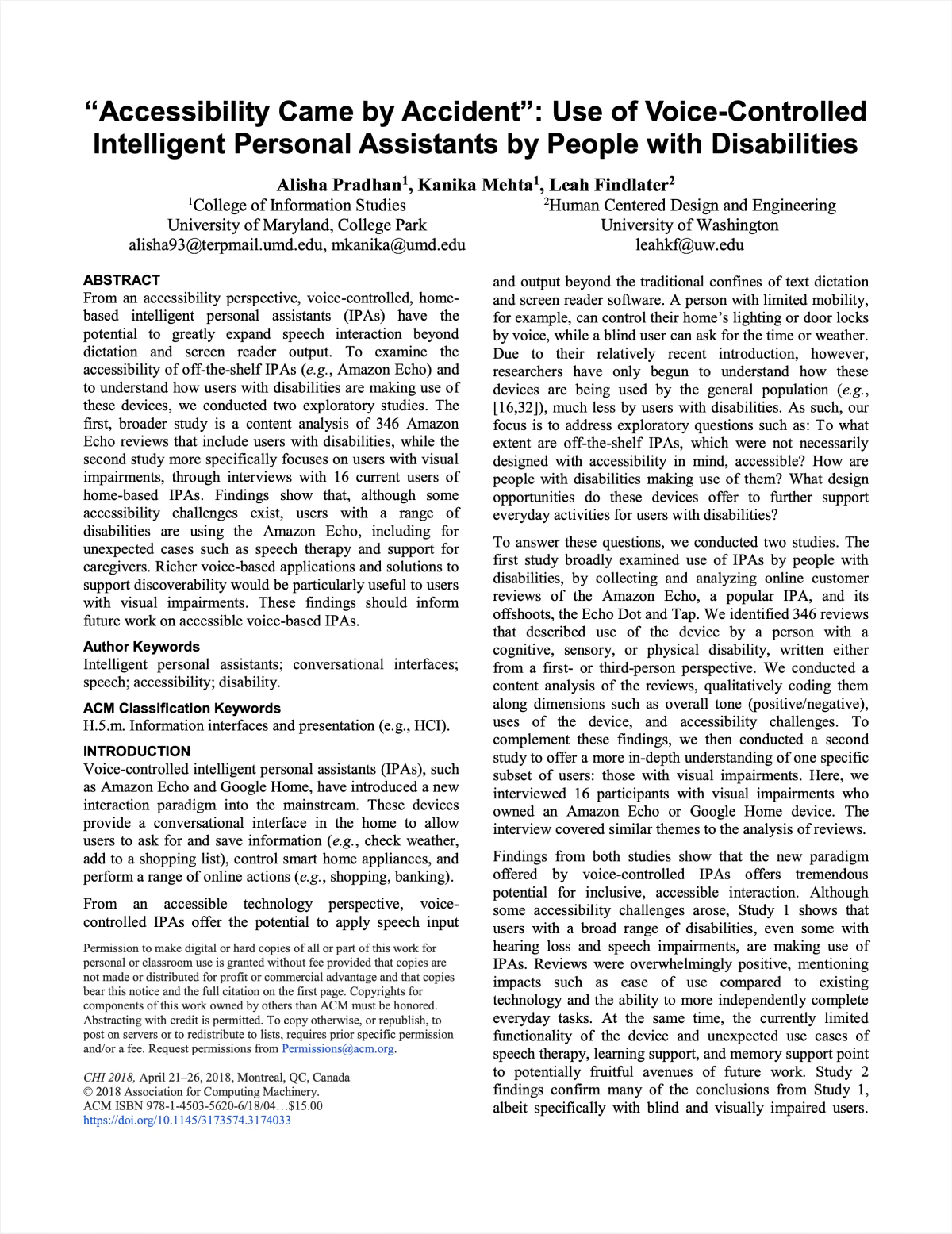
“Accessibility Came by Accident”: Use of Voice-Controlled Intelligent Personal Assistants by People with Disabilities
Alisha Pradhan, Kanika Mehta, Leah Findlater · 01/04/2018
The paper investigates the use of voice-controlled intelligent personal assistants (IPAs) by people with disabilities. The authors outline the potential of IPAs as assistive technologies (AT) while advocating for intentional and inclusive designs.
- IPA as Assistive Technology: The paper shows that IPAs, such as Siri and Alexa, serve as valuable AT for people with various disabilities, enabling greater independence and convenience.
- Unintended Users: The fact that disabled people benefited greatly from IPAs, although not specifically designed as AT, underlines the value of inclusive design practices.
- IPA Limitations: Examples of IPAs not recognizing certain speech patterns or not supporting offline functionality highlight their limitations as AT and areas calling for improvement.
- Design Suggestions: Listening to voices of disabled users, the authors suggest the need for customizability, multimodal interaction options and context-aware functionalities in IPAs.
Impact and Limitations: The findings underscore the value and urgent need of inclusive design in technology development. Empirically, this paper illuminates the transformative potential of IPAs as AT, although they were not initially intended as such. The paper, however, is focused on western contexts, suggesting a need for broader cultural and socio-economic investigations.
Read more