Evolution /
What Sparked the Rise of Participatory Design in HCI?
The 1990s marked a turning point as HCI began recognizing human-technology interactions as socio-technical phenomena. The emerging participatory design movement radically transformed perspectives - from viewing technology users as passive recipients to engaging them as vital design partners. Catalyzed by researchers like Douglas Schuler and Ann Bødker in CSCW (computer-supported cooperative work), participatory principles highlighted that those impacted by technology should also actively shape its course. The approach drew inspiration from the Scandinavian workplace democracy movement to give workers greater control over the tools and systems central to their jobs. As participatory design practices evolved, they brought rich emotional understanding of contexts and user needs to the forefront. The methodology appreciated the depth of lived experiences that people could contribute when included as design collaborators. This signaled an expanded, human-centric vision for developing technology that resonated with and empowered diverse stakeholders through empathy, dialogue and co-creation.
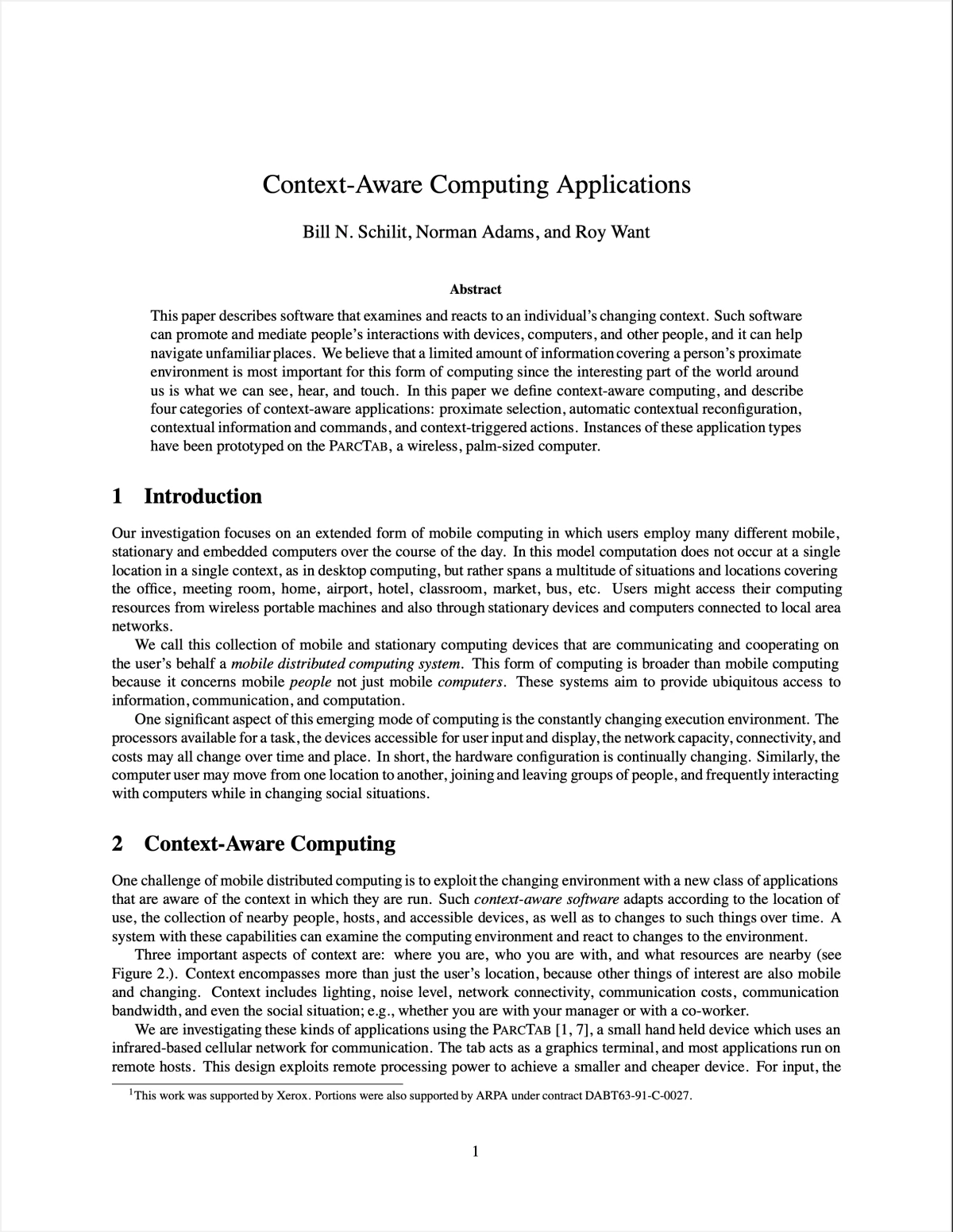
Context-Aware Computing Applications
Bill N. Schilit, Norman Adams, Roy Want · December1994
This groundbreaking 1994 paper by Bill Schilit and colleagues marks one of the earliest comprehensive discussions on context-aware computing in HCI. It catapulted the concept into mainstream HCI research, advocating for systems that adapt according to the user’s context.
- Context Sensing: Schilit et al. presented how systems can sense and interpret data about the user's environment. This foundational idea has led to significant advancements in adaptive and personalized user experiences.
- User Context Adaptability: The paper introduces the notion that applications can and should dynamically adapt their functionalities based on context. This ushered in an era of smart environments and responsive interfaces.
- Contextual Services: Beyond mere adaptation, the paper explores how context can be used to provide new services or modify existing ones, which has implications in the realms of IoT and smart homes.
- Privacy Concerns: While not the central focus, the paper did flag potential privacy implications, a topic that has become increasingly important in contemporary HCI debates.
Impact and Limitations: This work laid the foundation for ubiquitous computing and context-sensitive applications, changing how we think about human-computer interactions. Its limitations lie in the dated technology discussed, but its principles remain widely applicable. Further research could extend these ideas into more modern contexts, like blockchain-based privacy solutions for context-aware systems.
Read more
Extra-ordinary Human-Computer Interaction: Interfaces for Users with Disabilities
Alistair D. N. Edwards · 01/12/1995
This ground-breaking book from 1995 challenged the prevalent HCI paradigm by emphasizing the importance of versatile user interfaces catering to people with disabilities. Edwards' work pioneered the focus on accessibility, which is now recognized as a crucial component of HCI design.
- Accessibility: The paper advocates for designs that accommodate all users, regardless of abilities. It emphasizes that inclusive design benefits all users by improving usability overall.
- User-Centered Design: Edwards asserts that understanding the needs and abilities of users is crucial in developing accessible interfaces. He puts users at the heart of the design process.
- Assistive Technology: The author explores how assistive technologies like screen readers and alternative input devices can facilitate interaction for users with disabilities.
- Adaptive Systems: Edwards introduces the concept of systems that can adjust their behavior in response to the abilities and needs of the user, underscoring the need for adaptable, context-specific interfaces.
Impact and Limitations: While Edward's work has greatly influenced today's emphasis on accessibility in HCI design, it was somewhat ahead of its time and therefore faced implementation barriers. Nonetheless, it laid the groundwork for current accessibility guidelines and practices in digital design. Further research could develop more nuanced, flexible systems that cater to an even broader range of user abilities and preferences.
Read more
Affective Computing
Rosalind W. Picard · 01/07/1997
In 1997, Rosalind W. Picard introduced the groundbreaking concept of Affective Computing, a subfield of HCI and computer science focused on recognizing and emulating human emotions in machines. The book established a theoretical framework for integrating emotional intelligence into computing systems.
- Emotion Recognition: Picard broke ground in exploring how computing systems could recognize human emotions through biometric markers. These insights have later been employed in UX design to personalize and adapt interfaces in real-time.
- Human-Computer Symbiosis: The work suggested that machines capable of understanding human emotions can lead to more intuitive and emotionally rich interactions, transforming the standard of HCI.
- Ethical Considerations: The book was one of the first to raise ethical questions concerning the use of emotion-sensitive systems, particularly in terms of user consent and data privacy.
- Adaptive Learning Systems: Picard's theories have been foundational in the development of adaptive learning systems, which adjust their behavior based on the emotional state of the user, enhancing the overall UX.
Impact and Limitations: "Affective Computing" set the stage for emotionally responsive technologies, from virtual assistants to customer service bots. However, challenges persist in the accurate and ethical collection and interpretation of emotional data, which calls for continued scrutiny and innovation.
Read more
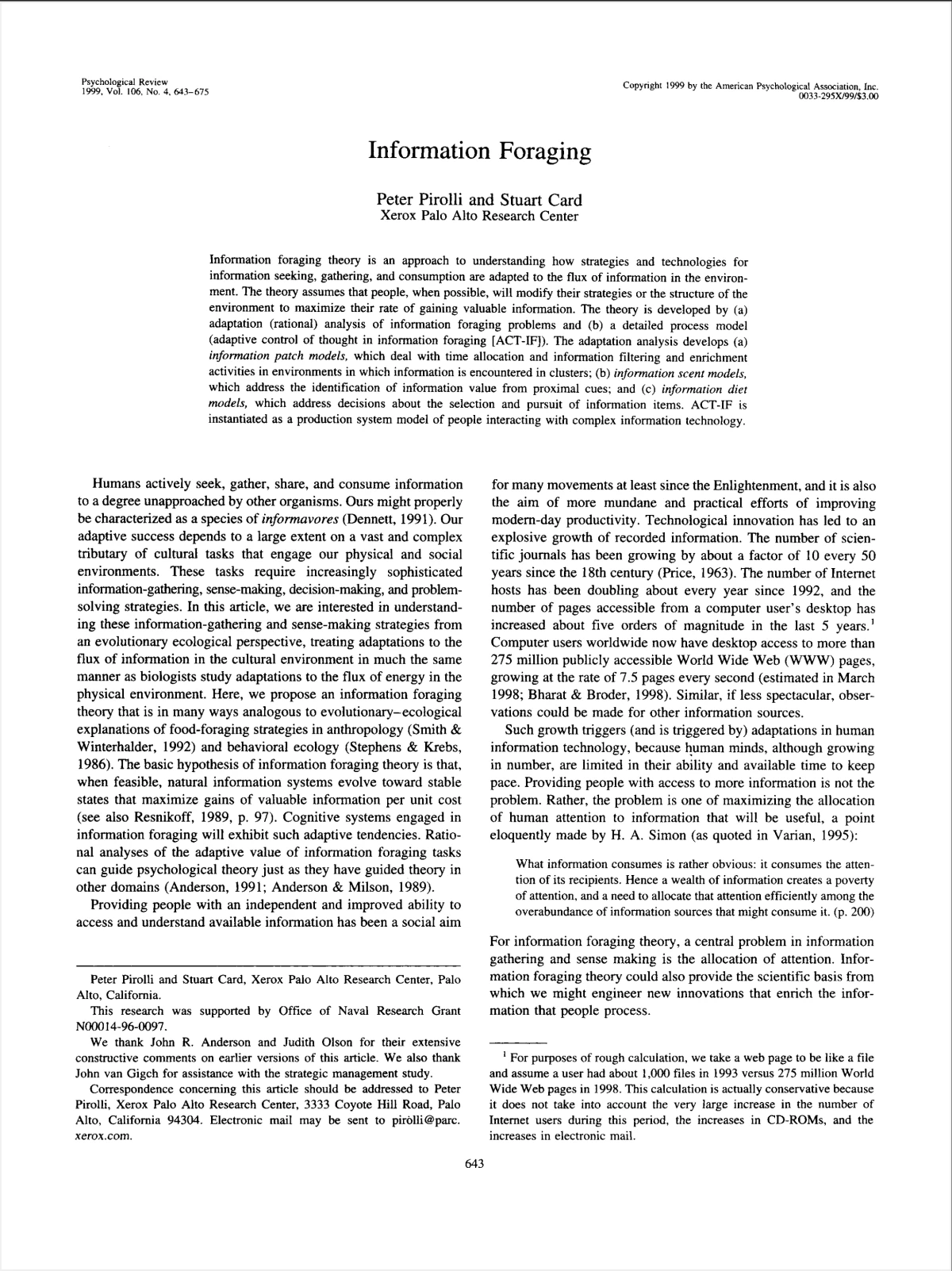
Information Foraging
Peter Pirolli, Stuart Card · 01/01/1999
Information Foraging Theory by Peter Pirolli and Stuart Card presents a revolutionary framework for understanding how users seek and gather information in digital environments. Building upon behavioral ecology, the theory introduces novel metrics and design paradigms that extend the scope of HCI, linking it to information science and psychology.
- Optimal Foraging: The theory adapts the concept of optimal foraging from biology to describe how users seek 'information patches' and make 'quit/continue' decisions based on the value of information against effort.
- Information Scent: This idea signifies the cues that guide users toward valuable information, akin to how predators are led by scent. It offers designers actionable insights to optimize navigation and content discoverability.
- Adaptive Strategies: The theory acknowledges the dynamic nature of user behavior and advises designers to build systems that can adapt to changing user needs for efficient information foraging.
- Cognitive Processes: It also explores the cognitive aspects of information foraging, linking the process of seeking to cognitive load, decision-making, and attention management.
Impact and Limitations: The theory has significantly influenced web design, search engines, and recommender systems by highlighting the cognitive and behavioral aspects of information seeking. However, its limitation lies in its less rigorous validation in socially driven information landscapes like social media, calling for additional research.
Read more
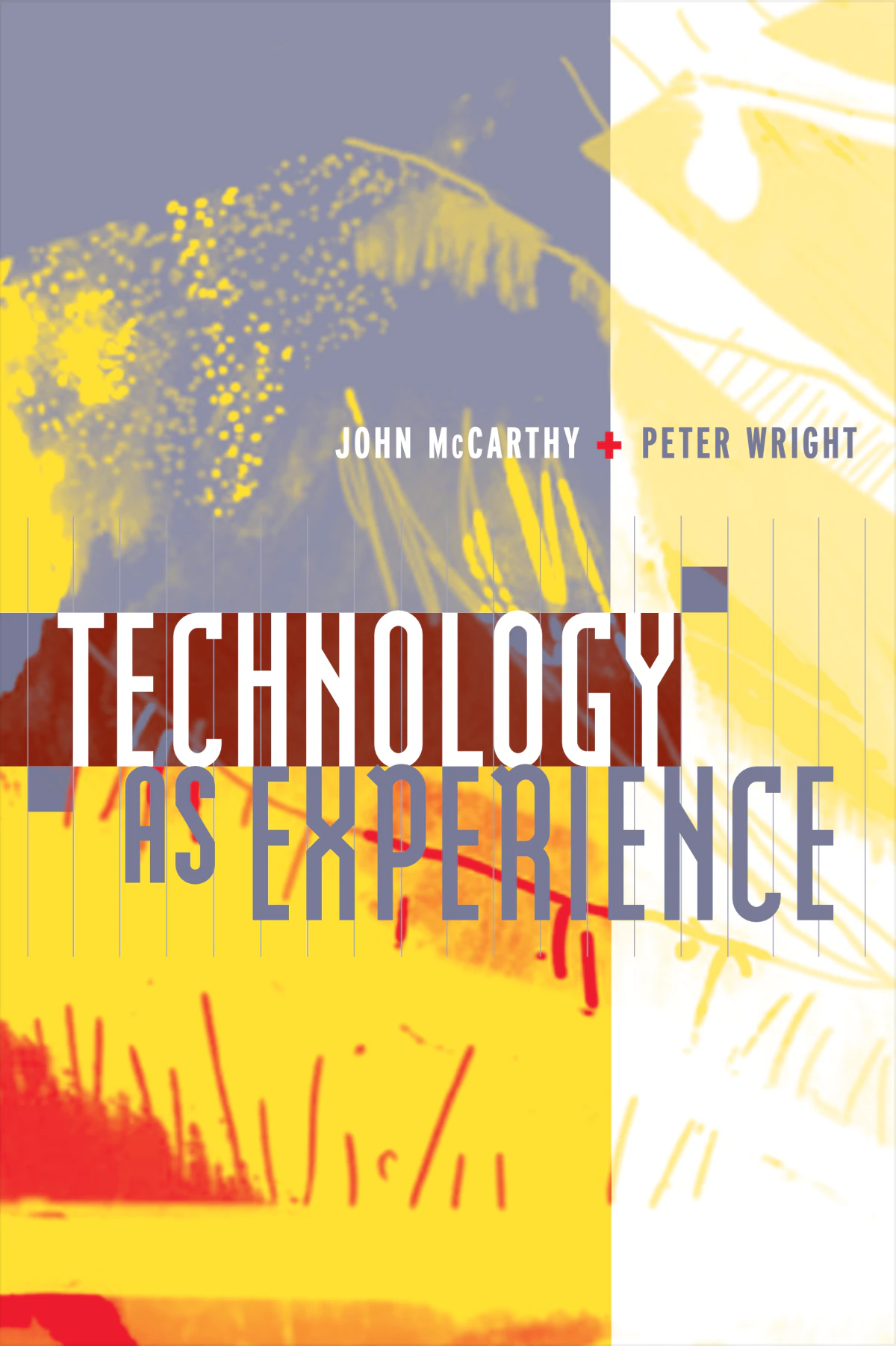
Technology as Experience
John C. McCarthy, Peter C. Wright · 01/01/2004
"Technology as Experience" by John C. McCarthy and Peter C. Wright delves into the complexities of user experience by emphasizing the emotional, intellectual, and sensual aspects of interacting with technology. Unlike traditional views that reduce HCI to functionality and usability, the authors argue for a holistic understanding of how technology becomes integrated into everyday lived experiences.
- Felt Experience of Technology: Drawing upon pragmatist philosophers like John Dewey and Mikhail Bakhtin, the authors propose that HCI must incorporate the emotional and intellectual elements of user experience, as these factors are pivotal in our relationship with technology.
- Zestful Integration: Inspired by Dewey’s concept of the “aesthetic experience,” McCarthy and Wright introduce the idea of “zestful integration” as a model for future HCI. Here, technology is not just a tool but an integral part of our day-to-day life experiences.
- Relational Approach: The authors advocate for an open, relational approach to HCI that views the interaction between humans and computers as a creative exchange, rather than a one-way transaction.
- Real-World Examples: The book substantiates its framework with a range of real-world examples, such as online shopping and ambulance dispatch, to demonstrate the applicability of this broader perspective in practical settings.
Impact and Limitations: This work serves as a groundbreaking redirection in HCI research, shifting the focus from mere functionality to a deeper, more nuanced understanding of lived experiences with technology. It opens doors for further research that incorporates emotional and aesthetic elements into HCI design. However, operationalizing these abstract concepts into actionable design principles may present a challenge and needs further exploration.
Read more